Famous Cats in History: Ship's Cats, Office Cats and the Names They Made Famous
The most famous cats in history aren't just pretty faces. They're working animals and loyal companions whose names made it into ship logs, medal citations, government web pages and science journals. Think of Trim, the ship's cat who sailed around Australia with explorer Matthew Flinders. Or Simon, the wounded ship's cat who received a medal for bravery in 1949. Or Félicette, the first cat in space, and Larry, the cat who holds an official title at 10 Downing Street.
This guide tells their stories using primary records wherever we could find them: Flinders's own handwritten tribute, Shackleton's expedition book, the medal citation, NASA's history office and the official pages of the people and places involved. Along the way, we'll look at how each cat got its name. That's the part that's most useful if you're naming a cat of your own, because these names tell you a lot about the people who chose them.
🐾 Pick a name from this list
Tap Next for a name from this page, and save the ones you love.
Famous Cats in History at a Glance
| Cat | When | Where | Why remembered | Where the name came from |
|---|---|---|---|---|
| Trim | Born 1799, lost 1804 | Royal Navy ships, Australia, Mauritius | Sailed around Australia with Matthew Flinders | A character in Laurence Sterne's novel Tristram Shandy |
| Mrs. Chippy | 1914 to 1915 | Shackleton's Endurance expedition, Antarctica | The expedition's ship's cat | Belonged to the ship's carpenter; "chippy" is British slang for a carpenter |
| Tabby and Dixie | 1860s | The White House | Abraham Lincoln's cats | A gift from Secretary of State William Seward |
| Simon | 1949 | HMS Amethyst, Yangtze River, China | Received the PDSA Dickin Medal | Not recorded in his medal citation |
| Félicette | 1963 | France's space program | First cat in space | A cheerful French name related to Félix |
| Socks | 1990s | The White House | The Clinton family's cat | His white paws |
| CC | Born 2001 | Texas A&M University | The world's first cloned cat | Short for "Copy Cat" |
| Tama | 2007 to 2015 | Kishi Station, Wakayama, Japan | Stationmaster of a struggling rail line | A classic Japanese cat name; her successors are numbered |
| Larry | 2011 to today | 10 Downing Street, London | First cat with the official title Chief Mouser | Given by staff after his adoption from a shelter |
Now let's take them one at a time, in the order they lived.
Trim: The Ship's Cat Named After a Novel (1799 to 1804)
Trim is one of the best-documented cats of any era, thanks to the man who loved him. In December 1809, while held prisoner on the island of Mauritius (then called the Isle of France), the British navigator Matthew Flinders wrote a long, affectionate biography of his cat. The handwritten manuscript is held by Royal Museums Greenwich, which has published the full tribute to Trim page by page.
How Trim got his name
Flinders says Trim was born on board ship in 1799, during a voyage from the Cape of Good Hope to Botany Bay. He named the kitten after a character in Laurence Sterne's comic novel Tristram Shandy: Corporal Trim, whom Flinders describes as "my uncle Toby's honest, kind-hearted, humble companion." In other words, the name was a compliment. Flinders saw in his cat the same loyalty and good nature as the fictional servant.
The tribute is full of playful touches. Flinders gives some of the ships invented nicknames, like the Roundabout and the Spyall, and he calls Trim "my black gentleman," noting his white paws. If you have a cat with the same coloring, our black cat names list has plenty of company for Trim. The tribute reads less like a log and more like a letter from a proud owner.
Life at sea and ashore
Trim's adventures fill eight pages. In England he escaped a landlady's room through a window, crashed through the glass, and smashed her china chasing a mouse, then rubbed against her ankles until she forgave him. He rode a stagecoach to London sitting on the seat like a paying passenger. Then he went back to sea.
The epitaph Flinders wrote for him sums up the big picture. Trim sailed to Australia and went all the way around it. Returning to Europe in 1803, he was shipwrecked. When Flinders stopped at the Isle of France for help, he was taken prisoner, and Trim with him.
How Trim was lost
Trim liked to slip past the guards for short outings. After the prisoners were moved, a local French woman offered to look after him as company for her young daughter, and Flinders agreed. About two weeks later, the island's newspaper reported Trim missing and offered a reward. He was never found. Flinders feared the worst and ended his tribute with an epitaph calling Trim "the best and most illustrious of his Race."
Trim's story shows something we'll see again and again: a cat becomes famous because someone cared enough to write the name down.
Mrs. Chippy: Shackleton's Antarctic Cat (1914 to 1915)
When Ernest Shackleton's ship Endurance sailed for Antarctica, the crew included a cat that belonged to the ship's carpenter. The crew called the cat Mrs. Chippy.
The name
"Chippy" is British slang for a carpenter. So "Mrs. Chippy" reads like "the carpenter's wife," a crew joke that turned the cat into a member of the family. It's a great example of a name that comes from the owner rather than the animal. Plenty of ship's cats were named this way, after the cook, the captain or the part of the ship where they lived.
What Shackleton recorded
Shackleton's own account of the expedition, South, is freely available from Project Gutenberg. After the ship was trapped and crushed by sea ice in 1915, the men had to move onto the ice with only what they could haul. In his entry for October 29, Shackleton wrote that several young sled dogs and "Mrs. Chippy, the carpenter's cat, have to be shot." The party couldn't care for animals that wouldn't survive what was coming. He added that the men who'd cared for them seemed to feel the loss of their friends.
It's a hard ending, and it's part of why Mrs. Chippy is remembered. The name appears in one of the most famous survival stories ever told, recorded by the expedition leader himself.
Simon of HMS Amethyst: The Cat With a Medal (1949)
The PDSA Dickin Medal is a British award for animals that showed bravery or devotion to duty in wartime. Most recipients are dogs, pigeons and horses. One is a cat named Simon.
What Simon did
According to the PDSA's record of Dickin Medal number 54, Simon served on the Royal Navy ship HMS Amethyst during the Yangtze Incident in 1949, when the ship came under artillery fire on the Yangtze River in China. Simon was hurt by shrapnel and burns. Even so, he kept hunting the rats that threatened the crew's limited food. His citation says he served "disposing of many rats though wounded by shell blast."
His titles
Simon collected more than one name. The PDSA says that after he killed a particularly destructive rat, the crew promoted him to "Able Seaman," a real Royal Navy rank for an experienced sailor. He also received the ship's campaign ribbon for service from April 22 to August 4. An honorary rank is a kind of name too: it told everyone aboard that the crew considered this cat one of their own.
Simon is a good reminder that a cat's "name" can be layered. There's the everyday call name (Simon), the title earned on the job (Able Seaman), and the formal record (Dickin Medal recipient number 54).
Félicette: The First Cat in Space (1963)
NASA's history office keeps a brief history of animals in space. It notes that French scientists launched the first cat into space on October 18, 1963. Her name was Félicette, and she was brought back safely by parachute. A second French flight on October 24 ran into trouble, and that cat could not be recovered.
About the name
Félicette is a feminine, affectionate-sounding French name related to Félix, which is also the name of a famous cartoon cat. It sounds bright and happy, a little like the English name Felicity. For a cat who did something no cat had done before, it's a fitting name, and it's become the one history remembers.
Félicette's flight is a useful contrast to Trim's story. Trim's fame came from his owner's love letter. Félicette's came from a scientific record. Both survived because somebody wrote a name down at the moment it mattered.
Presidential Cats: Tabby, Dixie, Misty Malarky Ying Yang and Socks
The White House has housed cats for more than a century and a half. The Clinton Presidential Library has an online exhibit called Socks, Buddy and the History of Presidential Pets that covers several of them.
Lincoln's cats
According to the library, Abraham Lincoln is believed to be the first president to keep cats as pets. Secretary of State William Seward gave the family two cats, Tabby and Dixie. When Mary Todd Lincoln was asked about her husband's favorite hobbies, she reportedly answered, "Cats."
Look at those two names. Tabby describes a coat pattern, the striped or swirled markings many cats have. It's the 1860s equivalent of naming a cat Stripes. Dixie was a familiar word of the era. Neither name is fancy, and that's the point: they're the names of family pets, not state symbols.
Misty Malarky Ying Yang
The same exhibit includes Amy Carter's cat, Misty Malarky Ying Yang. If Tabby is the plain end of presidential cat names, this is the other end: a long, playful name a child would love, with three parts that each sound fun to say. It's a reminder that kids often give pets the most creative names in the house.
Socks, the "First Cat-elect"
Socks was a stray tuxedo cat who, with his brother, was found as a kitten under the porch of Chelsea Clinton's piano teacher in Arkansas. The Clintons adopted him and named him for his white paws. After the 1992 election, he was dubbed the "First Cat-elect."
Socks got so much mail that the library says hundreds of letters arrived each month. Volunteers from the U.S. Soldiers and Airmen's Home answered them with postcards or prints signed with his paw print. He appeared in a Murphy Brown episode, on a White House web page with an audio clip of his meow, and in a video game that was never released. After the Clintons left the White House, Socks lived with Betty Currie, a former secretary to the president, and he died in 2009.
Socks is a classic "looks" name, like Boots, Mittens or Patches. Names like this are popular because you can see the reason the moment you meet the cat.
Office Cats: Larry, Chief Mouser to the Cabinet Office
Britain has a long tradition of cats in government buildings, and the most famous today is Larry. The UK government's own history of 10 Downing Street says Larry has lived at Number 10 since February 15, 2011. He was recruited from Battersea Dogs and Cats Home, a London animal shelter, because staff liked his mousing skills.
The same page says Larry was the first cat at Number 10 given the official title of Chief Mouser. Its tongue-in-cheek job description lists greeting guests, inspecting security defenses and testing antique furniture for napping quality. He's also, the page jokes, working on the mouse problem, which is still "in tactical planning stage."
What's in a title
Larry's everyday name is short and friendly, a human name like many shelter cats get. His title, though, is what made him famous. "Chief Mouser to the Cabinet Office" turns a house cat into a civil servant. It's the same trick the crew of HMS Amethyst played with Simon's rank of Able Seaman. Giving a cat a job title is a way of saying it belongs to the team.
Office cats show up all over the world, in libraries, bookstores, farms and shops. If your cat has a "job" in your home, like guarding the window or supervising your laptop, a playful title can be a fun middle name.
Tama the Stationmaster and Her Numbered Successors
In Japan, a cat named Tama became a symbol of a small railway's comeback. The Wakayama Electric Railway's own page on its cat stationmasters lays out her career.
Tama's career
- January 5, 2007: Tama became stationmaster of Kishi Station, the railway's first cat stationmaster.
- October 2008: A Kansai University professor estimated her economic effect for 2007 at 1.1 billion yen.
- January 5, 2008: Promoted to Super Stationmaster.
- 2010 and 2011: Promoted to executive officer, then managing executive officer. A Tama Museum opened at Kishi Station on August 4, 2010.
- January 5, 2013: Became acting company president.
- June 28, 2015: The railway held a company funeral and named her Honorary Permanent Stationmaster. She is enshrined at a small shrine on the Kishi Station platform.
A naming system built on numbers
Tama's successors have one of the cleverest naming schemes in the animal world. Each name combines a Japanese number with "tama." Nitama ("ni" means two) arrived in 2012 as Tama's first assistant and later took over at Kishi Station. Yontama ("yon" means four) was born in 2016 and became a stationmaster in 2018. Gotama ("go" means five) was appointed in January 2025, and Rokutama ("roku" means six) arrived as a stationmaster candidate in January 2026.
This works like a royal number. Just as a king might be Henry II or Henry VIII, each cat carries Tama's name forward while staying an individual. It's a lovely idea if you've lost a beloved cat and want the next one to honor them without simply reusing the name.
If you like names with meaning baked in, our list of names that mean cat is another fun place to look.
CC: The First Cloned Cat (2001)
On December 22, 2001, a kitten was born at Texas A&M University who made science history. According to the university's College of Veterinary Medicine, CC was the world's first cloned cat, produced by a research team at the college.
A name that tells the story
CC stands for "Copy Cat." It's a pun, it's an abbreviation, and it explains exactly why she was famous, all in two letters. It's hard to think of a better example of a name doing a lot of work.
CC went on to live as a family pet with Duane Kraemer, a veterinary professor who helped clone her, and his wife Shirley. In 2006 the university announced she'd had three kittens, fathered by a tabby named Smokey. Two kittens looked like CC and one had Smokey's gray coloring. The press release says all were healthy, which was important news for scientists studying whether clones could live normal lives.
Why Ships, Offices and Stations Kept Cats
Notice how many of these cats had jobs. Trim, Mrs. Chippy and Simon lived on ships. Larry lives in a government office. Tama worked at a train station. That's not a coincidence. For most of history, a cat was a practical tool as well as a friend.
The ship's cat
On a long voyage, food was stored for months, and rats could ruin it. Simon's PDSA record makes the stakes plain: rats threatened the crew's limited food supplies while the ship was trapped under fire, and Simon kept hunting them even while wounded. A good mouser protected the crew's meals, and that earned real respect.
A cat also gave sailors something to care about far from home. Flinders wrote eight pages about Trim. Shackleton noted that the men who cared for the expedition's animals seemed to feel their loss. On a cramped ship, a cat was one of the few living things that wasn't on duty.
The office cat
Old buildings have mice, and a cat is a quiet way to keep them in check. The UK government's description of Larry plays with this, saying his mouse strategy is still in the planning stage. Today, office cats are as much about morale and public goodwill as pest control. Larry's page notes that the public sends him gifts and treats every day.
The station cat
Tama's job was different again. The railway credits her with helping to save and revive its line, and a university professor estimated her economic effect at 1.1 billion yen for 2007 alone. She didn't catch mice for a living. She drew visitors. It's the most modern kind of working cat: a mascot whose name became a brand.
How the job shaped the name
Working cats often got names tied to the work or the workplace. Mrs. Chippy was named for the carpenter. Simon earned the rank of Able Seaman. Larry carries the title Chief Mouser. Tama was promoted through railway titles like Super Stationmaster. When a cat has a role, people tend to give it a title to match, and the title can become more famous than the name.
How These Cats Were Remembered
A cat becomes historic only if somebody keeps a record. Each cat in this guide was remembered in a different way, and the methods are worth knowing if you want to preserve your own pet's story.
- A written tribute. Flinders wrote Trim's life story by hand and closed it with a formal epitaph wishing peace to Trim's spirit and honor to his memory. More than two centuries later, a national museum has published it online.
- A published book. Mrs. Chippy appears in Shackleton's account of the expedition, which is still read today and freely available online.
- A medal and a gravestone. The PDSA keeps Simon's citation and shows a photo of his gravestone on its record of Dickin Medal recipients.
- A scientific record. Félicette's flight and CC's birth are part of the official history of space research and veterinary science.
- Letters and memorabilia. Socks received hundreds of letters a month, and the Clinton Library now keeps photos of him at the White House press briefing podium.
- A shrine and a museum. Tama has a Tama Museum at Kishi Station and a small shrine on the platform where she worked.
Look at what these records have in common. Almost every one includes the cat's name, a date and one specific detail: white paws, a rat caught under fire, a stagecoach ride, a meow on a web page. Those details are what make a story stick. A record that only says "we had a nice cat" won't be read in two hundred years. A record that says Trim rode to London sitting on the seat like a passenger still makes people smile.
You don't need a medal to do the same for your own cat. A notebook entry about how your cat got its name, a few photos with dates, or a short story written for your kids can turn into a family treasure.
Common Mix-Ups About Famous Cats
Famous animal stories get retold so often that small details drift. Here are a few points worth getting right, based on the sources above.
- "Mrs. Chippy was the carpenter's wife." No, Mrs. Chippy was the carpenter's cat. Shackleton's book says exactly that. The "Mrs." was a crew joke.
- "Simon was made a naval officer." Not quite. The crew gave him the honorary rank of Able Seaman, which is a sailor's rank, not an officer's. It was an honor from his shipmates.
- "Lincoln definitely had the first White House cats." The Clinton Library is careful here, saying Lincoln is believed to be the first president to keep cats as pets. It's the best-known claim, but it's phrased with care for a reason.
- "Socks was a fancy purebred." Socks was a stray, found as a kitten under a porch in Arkansas. Some of the most famous cats in history started out with no pedigree at all.
- "Larry belongs to the prime minister." The government page describes Larry as recruited from a shelter on staff recommendation, and his title belongs to the Cabinet Office. Prime ministers come and go; Larry has stayed.
- "Trim sailed on ships called the Roundabout and the Spyall." Those are playful nicknames Flinders used in his tribute, not the ships' official names. Royal Museums Greenwich links the real vessels in its notes.
- "Tama's successors are all named Tama." Close, but each successor has a number added, like Nitama and Yontama, so every cat keeps an individual name.
What Famous Cats in History Teach Us About Naming
Line up these cats and you'll see the same handful of naming methods used over and over, across two centuries and three continents.
| Naming method | Famous example | Modern ideas in the same style |
|---|---|---|
| Named after a character in a book | Trim, from Tristram Shandy | Atticus, Matilda, Gatsby, Hermione |
| Named after the owner or the owner's job | Mrs. Chippy, the carpenter's cat | Doc, Professor, Chef, Captain |
| Named for how the cat looks | Socks (white paws), Tabby (striped coat) | Boots, Patches, Smokey, Ginger |
| A plain human name | Simon, Larry | Oliver, Lucy, Gus, Frank |
| A pun or abbreviation | CC, for "Copy Cat" | Purrcy, Meowgan, Clawdia |
| A long, playful name chosen by a child | Misty Malarky Ying Yang | Sir Fluffington, Princess Sparkle Toes |
| A title or rank | Able Seaman Simon, Chief Mouser Larry | Captain, Duchess, Sergeant |
| A numbered line | Tama, Nitama, Yontama, Gotama | Max II, Luna the Second |
Two lessons stand out. First, the most memorable names usually come with a story. Trim honored a fictional friend, Mrs. Chippy honored the carpenter, and CC explained a scientific first. Second, cats often collect extra names over time, like ranks, titles and nicknames. That's normal, and it's part of the fun.
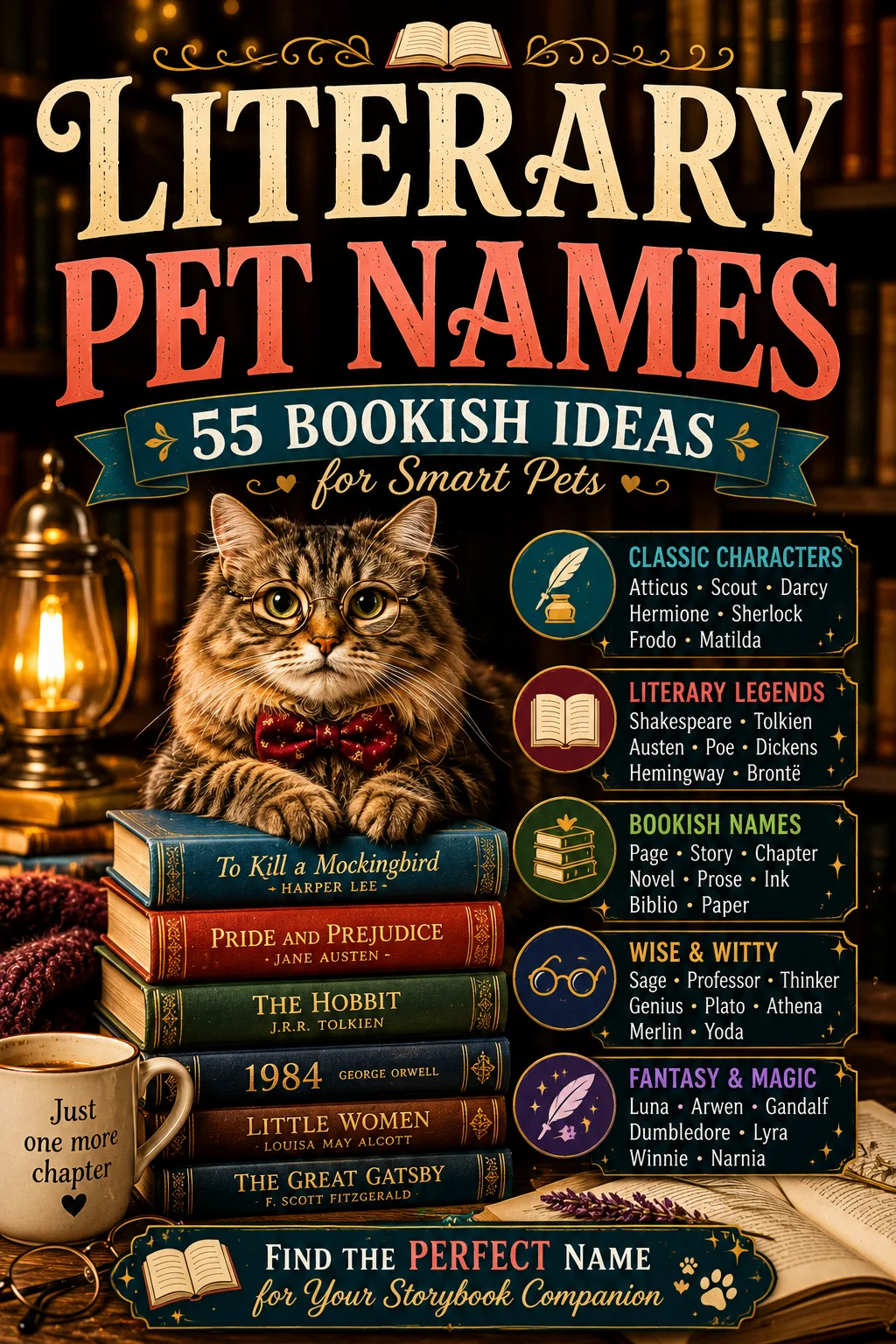
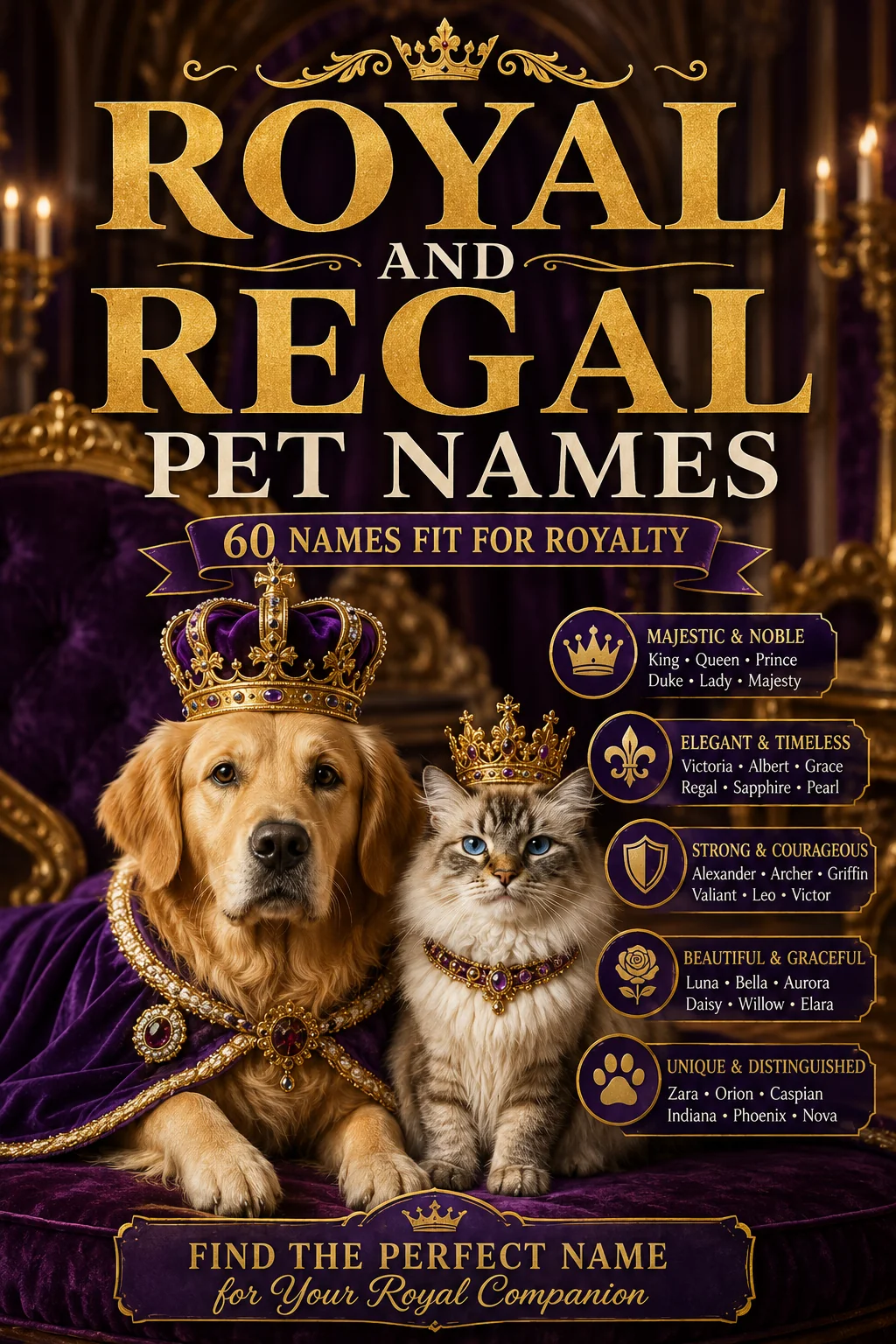
If you like names with a literary story, our page of literary pet names is full of them. For royal and titled names, try our royal pet names.
Do Cats Know Their Own Names?
Every one of these cats had a name humans used. But did the cats themselves recognize it? For a long time, nobody had tested that with cats the way scientists had with dogs.
In 2019, researchers in Japan published a study in Scientific Reports titled "Domestic cats (Felis catus) discriminate their names from other words." Atsuko Saito and colleagues used a method called habituation and dishabituation. In plain terms, they played a cat several ordinary words in a row until the cat stopped reacting much (that's habituation), then played the cat's own name and watched whether the reaction perked up again (that's dishabituation).
Across four experiments, with between 16 and 34 cats in each, household cats reacted more strongly to their own names than to other words. That held even when a stranger said the name. In one experiment, household cats also told their own names apart from the names of other cats they lived with, though only a small number of cats in that test settled down enough to be measured. The authors concluded that cats can tell their names from other words.
So when Socks heard "Socks" or Larry heard "Larry," there's good reason to think the name meant something to them, probably something like "this is about me, and something interesting might happen." What cats do with that information is, of course, up to the cat.
Are Famous Cat Names Still Used Today?
We were curious whether any of these historic names show up on real cats now, so we checked Seattle's public pet license records, which list 12,782 licensed cats by name. Here's what we found when we counted on October 30, 2026:
| Name | Licensed Seattle cats | Famous namesake |
|---|---|---|
| Felix | 21 | Félicette's root name, and a classic cartoon cat |
| Simon | 17 | Simon of HMS Amethyst |
| Misty | 9 | Misty Malarky Ying Yang |
| Socks | 8 | The Clintons' Socks |
| Larry | 5 | Larry of Downing Street |
| Tabby | 5 | One of Lincoln's cats |
| Chippy | 1 | Mrs. Chippy |
| Felicette | 1 | Félicette |
None of these come close to Seattle's most popular cat name, Luna, with 111 cats. But that's the appeal. A name like Simon or Larry is familiar enough that anyone can say it, yet rare enough that your cat probably won't share it with the neighbor's cat. And it comes with a ready-made story you can tell at the vet's office.
Even plain names can carry history. Smokey, with 23 Seattle cats, was also the name of CC's mate. Shadow, with 41, is one of the most common cat names in the file. Names don't need a medal behind them to mean something to you.
Try It Yourself: Give Your Cat a Name With a Story
Here's a simple way to borrow the methods behind these famous names. This is an illustrative example, not a real family.
- Start with the cat. Write down three things you notice: color, markings and behavior. Say your cat is black with white paws and loves sitting in the window.
- Try a "looks" name. Socks, Boots or Mittens would work, following the Socks and Tabby tradition.
- Try a "story" name. If you love a particular book, look for a loyal or funny character, the way Flinders chose Trim. A window-watching cat might suit a curious character's name.
- Try a "job" name. Since this cat watches the street all day, a title like Lookout or Captain fits, in the spirit of Larry the Chief Mouser and Able Seaman Simon.
- Say each one out loud. Call it across a room a few times. A short name with one or two syllables is easiest to use every day.
- Keep the extras. Use one as the everyday name and save the others as a title or middle name. "Captain Socks" works fine.
If your new cat is following a beloved one, consider the Tama approach: a name that echoes the first, like adding "Junior," "the Second" or a number in another language.
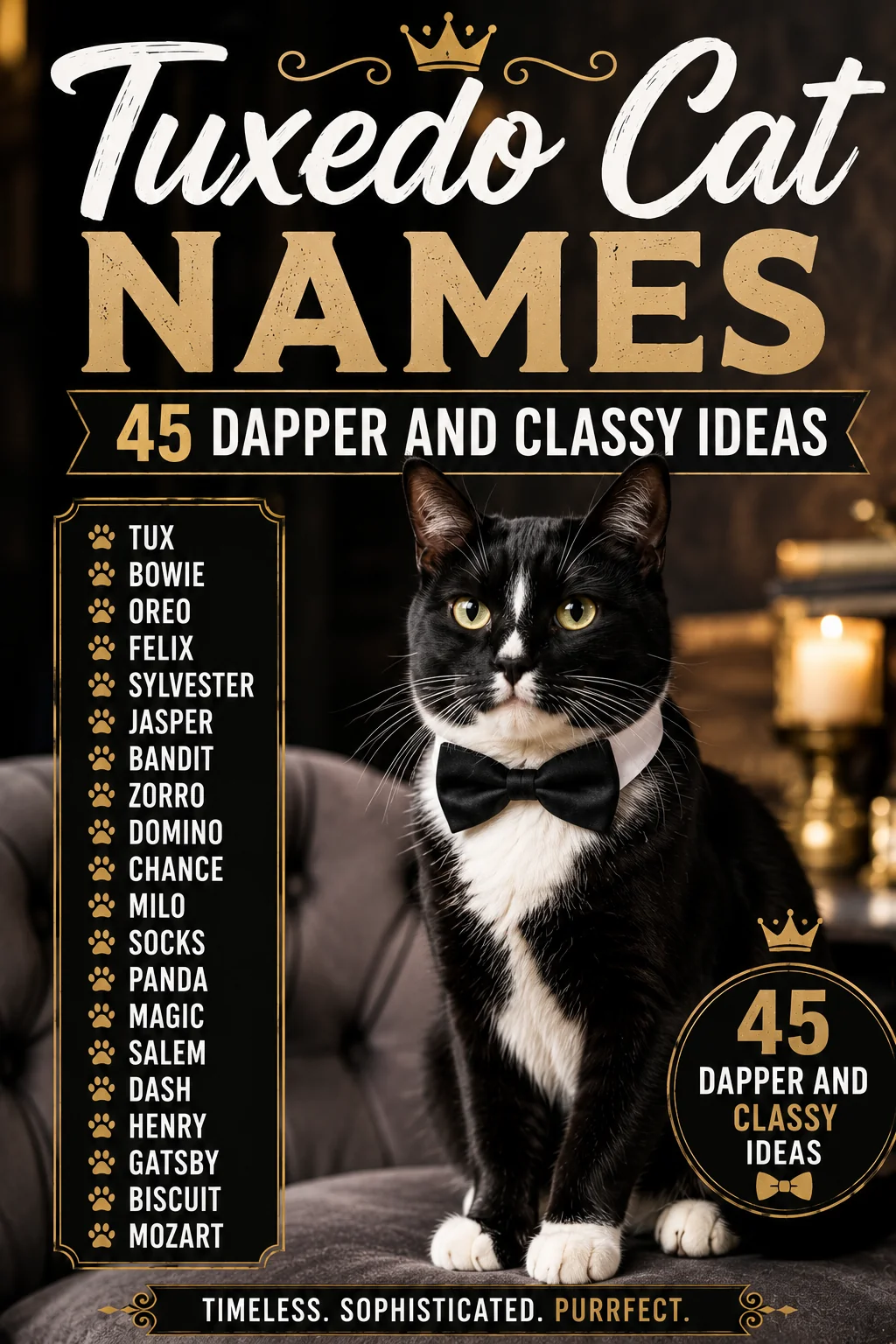
For more ideas, our cute cat names and tuxedo cat names lists are good places to keep browsing. Socks, after all, was a tuxedo cat too.
Find Your Own Cat's Name
Famous cats in history got their names from books, jobs, looks and plain affection. If you'd like help finding a name with that kind of meaning, try the free pet name finder on our homepage. You can browse over a thousand names by personality, color and meaning, take a short quiz, and keep a list of favorites until one feels right.
Working Cats Compared: Ships, Offices and Stations
This table lines up the cats from the guide that had a job, showing where each one worked and how people kept their story alive.
| Cat | Where the cat worked | How the cat was remembered |
|---|---|---|
| Trim | Royal Navy ships | A handwritten tribute and epitaph by Matthew Flinders |
| Mrs. Chippy | Shackleton's ship Endurance | A mention in Shackleton's published book, South |
| Simon | HMS Amethyst | A PDSA Dickin Medal and a gravestone |
| Larry | 10 Downing Street | The official title of Chief Mouser |
| Tama | Kishi Station in Japan | A Tama Museum and a small shrine on the platform |
Frequently Asked Questions
Who is the most famous cat in history?
There's no single winner, because cats became famous for very different reasons. For bravery, Simon of HMS Amethyst stands out, since he received the PDSA Dickin Medal in 1949. For science, Félicette was the first cat in space in 1963, and CC was the first cloned cat in 2001. For politics, Socks the Clinton cat and Larry of 10 Downing Street are probably the best known. For exploration, Trim sailed around Australia with Matthew Flinders.
What was the first cat in space called?
The first cat in space was Félicette. NASA's history office notes that French scientists launched her on October 18, 1963, and that she was brought back safely by parachute. A second French cat was launched on October 24, but that flight ran into trouble and the cat could not be recovered. Félicette's name is a cheerful French name related to Félix, and it's the name history remembers for this first flight.
Has a cat ever won a medal for bravery?
Yes. Simon, the ship's cat on the Royal Navy ship HMS Amethyst, received the PDSA Dickin Medal, a British award for animals that showed bravery or devotion to duty in wartime. The PDSA lists him as Dickin Medal number 54. During the Yangtze Incident in 1949, Simon was wounded by shrapnel and burns but kept catching rats that threatened the crew's food. The crew also gave him the honorary rank of Able Seaman.
Why was Shackleton's cat called Mrs. Chippy?
The cat belonged to the carpenter on Ernest Shackleton's ship Endurance, and chippy is British slang for a carpenter. Mrs. Chippy works like a crew joke meaning the carpenter's wife, which made the cat part of the ship's family. Shackleton mentions Mrs. Chippy by name in his book South, describing the sad day in October 1915 when the expedition, stranded on sea ice after losing the ship, could no longer keep its weakest animals.
Which US president first had a pet cat?
According to the Clinton Presidential Library, Abraham Lincoln is believed to be the first president to keep cats as pets. Secretary of State William Seward gave the Lincoln family two cats named Tabby and Dixie. The library also shares a story that when Mary Todd Lincoln was asked about her husband's favorite hobbies, she answered with one word: cats. Later White House cats include Amy Carter's Misty Malarky Ying Yang and the Clintons' Socks.
Is Larry the cat really an official government employee?
Larry holds an official title, though it's a lighthearted one. The UK government's history of 10 Downing Street says Larry has lived at Number 10 since February 15, 2011, and was the first cat there given the official title of Chief Mouser. He came from Battersea Dogs and Cats Home, a London shelter. His published duties, like testing antique furniture for napping quality, are tongue in cheek, but the title itself appears on a government website.
How did Trim the cat get his name?
Matthew Flinders named him after Corporal Trim, a loyal and kind-hearted servant in Laurence Sterne's novel Tristram Shandy. Flinders explained this in a handwritten tribute to his cat, written in 1809 while he was a prisoner on Mauritius. That manuscript is now held by Royal Museums Greenwich. The name was a compliment, since Flinders saw the same loyalty and good nature in his cat. Trim was born at sea in 1799 and lost on Mauritius in 1804.
Do cats actually recognize their own names?
Research says they can tell their names apart from other words. A 2019 study in Scientific Reports by Atsuko Saito and colleagues played cats a series of ordinary words and then their own names. Household cats reacted more strongly to their own names, even when a stranger spoke them. In one experiment, some cats also distinguished their names from the names of cats they lived with. Recognizing a name doesn't mean a cat will come when called, though.
Can I name my cat after a famous cat?
Of course, and it gives your cat a built-in story. Names like Simon, Larry, Socks, Trim and Felix are easy to say and still fairly uncommon. In Seattle's public pet license records, for example, Simon appears on 17 cats and Socks on 8, compared with 111 cats named Luna. If you're welcoming a new cat after losing one, you might try the Japanese railway's approach with Tama and give the new cat a name that echoes the old one.
Sources
We checked every source below while writing this guide. Last reviewed October 30, 2026, by Joan Ramos.
- Matthew Flinders: Biographical tribute to his cat Trim (FLI/11) (Royal Museums Greenwich)
- South: The Story of Shackleton's Last Expedition, 1914-1917 (Project Gutenberg)
- Simon: Dickin Medal 54 (PDSA)
- A Brief History of Animals in Space (NASA History Office)
- Socks, Buddy and the History of Presidential Pets (William J. Clinton Presidential Library and Museum)
- History of 10 Downing Street (GOV.UK)
- Cat Stationmasters (Wakayama Electric Railway)
- Copy Cat, first cloned cat, produces 3 kittens (Texas A&M University College of Veterinary Medicine)
- Domestic cats (Felis catus) discriminate their names from other words (Saito et al., 2019) (Scientific Reports, via PubMed Central)
- Seattle Pet Licenses (City of Seattle)